
500,000 Chromebooks: Shehbaz launches Youth Chromebook scheme
PM Shehbaz launched the Youth Chromebook scheme to distribute 500,000 refurbished Chromebooks with MiFi over two years, an initiative the government says will reach about 2.5 million people.
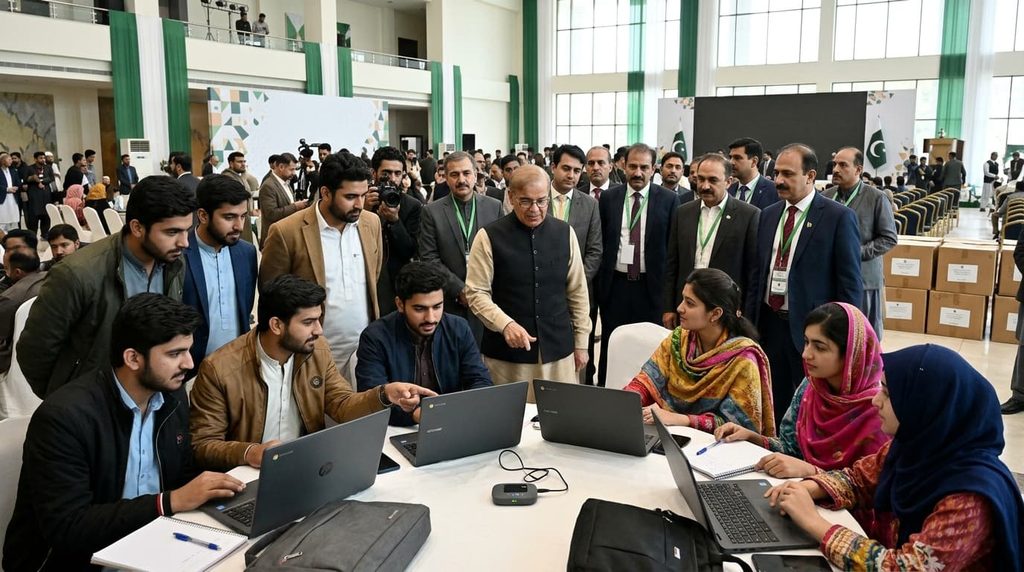
Prime Minister Shehbaz Sharif on Sunday unveiled the Youth Chromebook scheme, a federal programme to distribute 500,000 refurbished Chromebooks with MiFi internet connectivity to students across Pakistan over the next two years. The government says the devices—paired with portable internet—are intended for deserving students and high achievers and are expected to extend benefits to roughly 2.5 million people including family members.
Youth Chromebook scheme: rollout and partners
The rollout will deliver 500,000 Chromebooks in a two-year window, banners at the Islamabad launch described the units as “refurbished Chromebooks” and each device will include MiFi connectivity. The programme is being run in partnership with the Tokyo Technology Care Foundation (TTCF), which signed a memorandum with the government to support digital skills and access.
Officials at the event said distribution will be merit-based; the prime minister insisted the laptops would be awarded on the basis of the youth’s “ability and ability alone”. Ministers in attendance highlighted that the scheme explicitly includes registered religious seminaries, with Defence Minister Khawaja Asif saying one out of every five Chromebooks will go to a madrasa student.
Logistics, targets and prior programmes
Shehbaz recalled earlier PML-N governments had distributed 600,000 laptops over a decade and pledged to compress distribution of 500,000 Chromebooks into two years. The government had earlier announced a Google Chromebook assembly line in Pakistan last year; Deputy Prime Minister Ishaq Dar previously said that local assembly would underpin jobs, supply-chain development and potential tech exports.
At the launch, Education Minister Khalid Maqbool Siddiqui framed the initiative as part of a wider effort to convert Pakistan’s youth—estimated at about 150 million people—into a productive national asset by aligning education with evolving digital trends.
What This Means for Pakistan
For students, the scheme promises immediate access to devices and internet that the government says will enable remote attendance and improved access to educational content; the prime minister framed the devices as tools that will help students pursue further education and future employment. The inclusion of MiFi connectivity means benefits may spill over to households, with the government estimating roughly 2.5 million people could be reached through shared access.
Economically, organisers point to the Chromebook assembly effort and partnerships as creating downstream opportunities in assembly, supply chains and potential exports—areas highlighted by senior officials as part of the programme’s longer-term significance. The explicit inclusion of madrasa students removes a longstanding exclusion and increases the pool of recipients, with one in five devices earmarked for registered seminaries.
Background
The Youth Chromebook scheme follows earlier state-led laptop distributions; officials note prior schemes delivered 600,000 devices over ten years. In August, the prime minister said 250,000 high-achieving students would receive Chromebooks this year. The government has framed the new programme as accelerating digital inclusion and building on the domestic Chromebook assembly line launched last year.
The launch was attended by ministers, parliamentarians, educationists, vice-chancellors, ambassadors and foreign guests. The programme’s partners and officials say the initiative aims to boost digital skills and reduce barriers to education across urban and rural Pakistan.
Related coverage: see PakPulseLive’s reporting on Pakistan digital transformation at Global AI Summit 2026 and the broader tech infrastructure discussion in 6G spectrum sharing raises testing complexity.
Sources: News Source